CGT Like It’s 1999: Is Chalmers Set to Scrap the Howard-Costello Capital Gains Tax Discount?
CGT Like It’s 1999: Is Chalmers Set to Scrap the Howard-Costello Capital Gains Tax Discount?
The Australian political landscape is currently abuzz with whispers of a seismic shift in fiscal policy. Treasurer Jim Chalmers has signaled that the government is closely examining the nation’s tax settings, and at the heart of this scrutiny lies the controversial Capital Gains Tax (CGT) discount. Often referred to as the "Howard-Costello legacy," this 50% discount has been a cornerstone of the Australian property investment strategy for over two decades. However, as housing affordability reaches a crisis point and the federal budget faces mounting pressures, the Treasury is reportedly weighing the pros and cons of turning back the clock to a system that looks much more like the pre-1999 era.
The debate is not merely about numbers on a spreadsheet; it is a fundamental clash of economic ideologies. On one side, proponents argue that the discount encourages investment and simplifies the tax code. On the other, critics—and increasingly, members of the Albanese government—argue that it distort the housing market, favors the wealthy, and drains billions from the public purse. As we move closer to the next federal election, the question remains: will Chalmers take the ultimate political gamble and dismantle one of the most entrenched tax perks in Australian history?
The Ghost of 1999: Understanding the Howard-Costello CGT Legacy
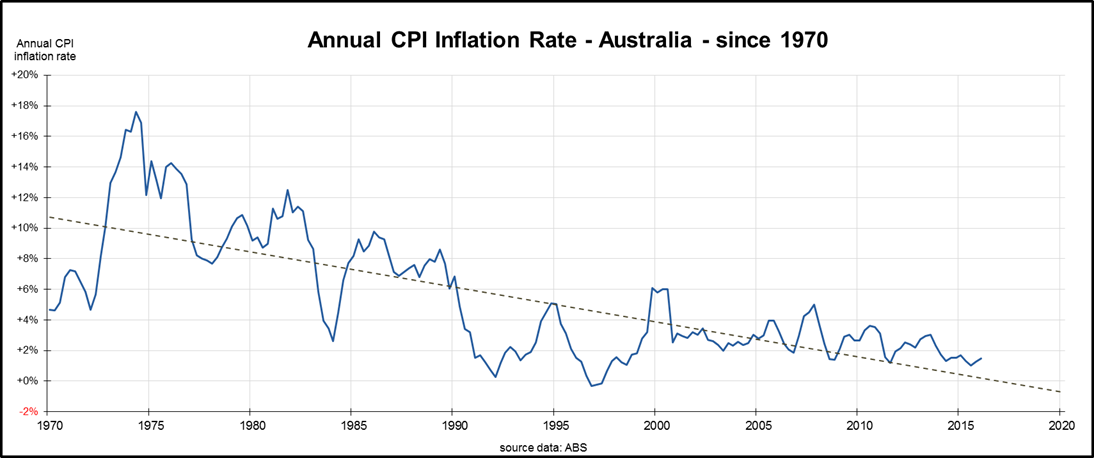
To understand why this issue is so explosive, one must look back to 1999. Before that year, capital gains were taxed differently. Investors were allowed to "index" the cost base of their assets to account for inflation. This meant you only paid tax on the "real" gain of an asset, excluding the portion of the profit that was simply a result of the rising cost of living. It was a complex system, but many economists considered it fair.
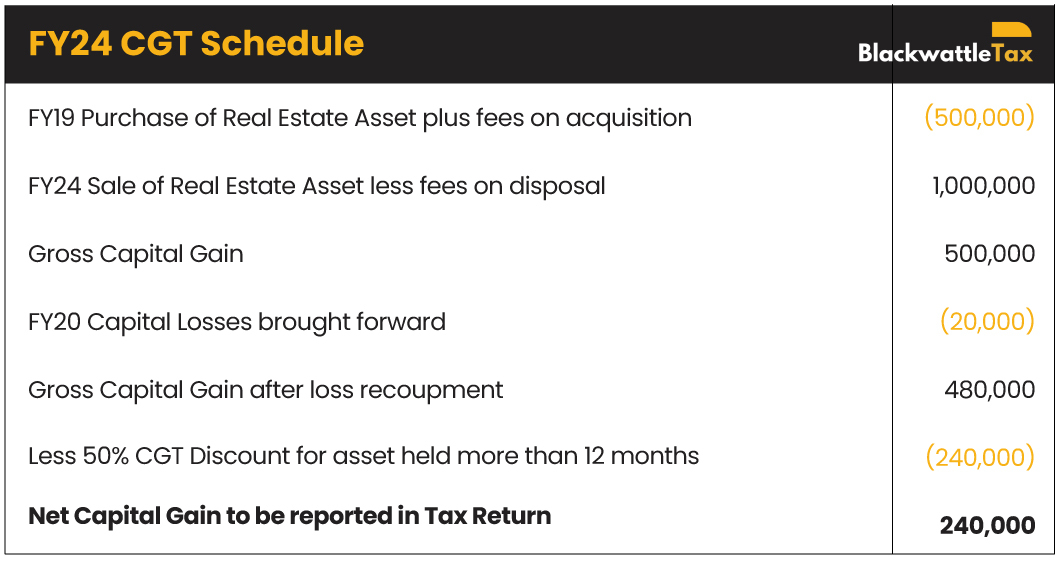
Enter Prime Minister John Howard and Treasurer Peter Costello. Following the Ralph Review of Business Taxation, the Coalition government decided to scrap indexation in favor of a flat 50% discount for individuals and trusts who held an asset for more than 12 months. The logic was simple: make the system easier to understand and incentivize more people to invest in the stock market and property. While it certainly succeeded in encouraging investment, it also inadvertently created a powerful engine for property speculation when combined with negative gearing.
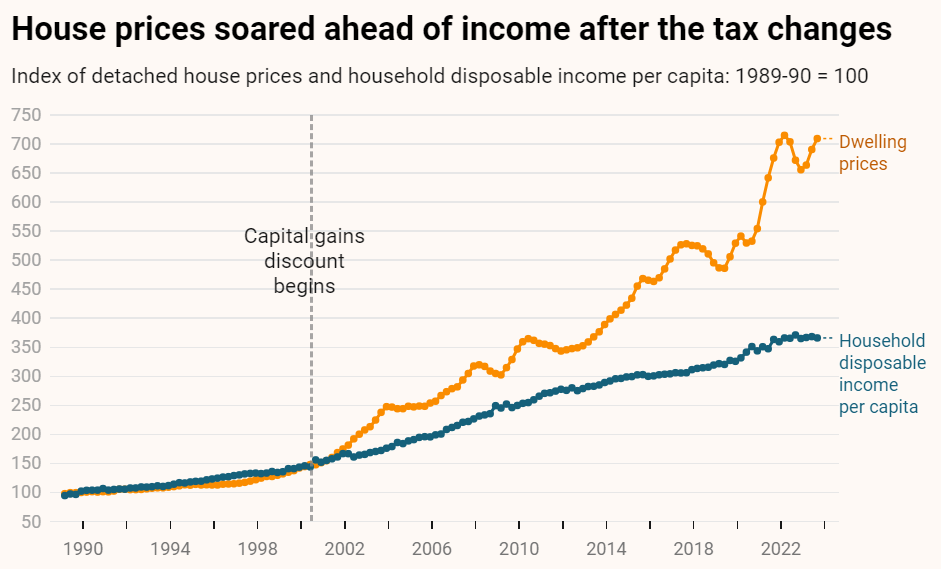
For twenty-five years, this discount has been the "holy grail" for Australian investors. It transformed property from a simple shelter into a high-yield financial vehicle. However, as the gap between house prices and wages widened into a chasm, the 1999 reform began to look less like a masterstroke of simplification and more like a structural driver of inequality.
Why Jim Chalmers is Eyeing Reform in 2024-2025
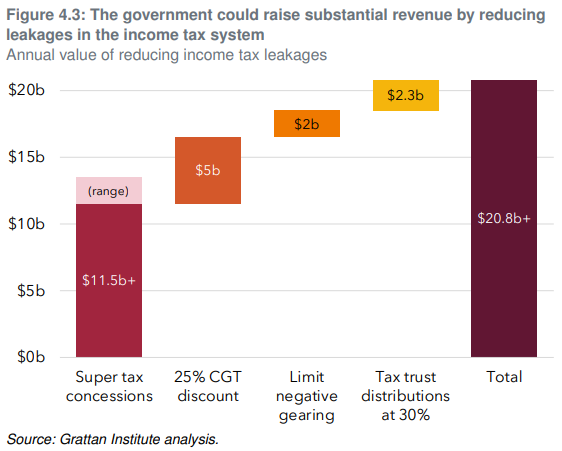
Treasurer Jim Chalmers is facing a unique set of challenges. The Australian economy is grappling with "sticky" inflation, a productivity slump, and a desperate need for revenue to fund NDIS, aged care, and defense. The CGT discount is an expensive "tax expenditure." According to Treasury figures, the CGT discount costs the budget billions of dollars in foregone revenue every year—money that many argue could be better spent on social housing or direct cost-of-living relief.
Furthermore, the political climate has shifted. The "Teal" independents and the Greens have been vocal in their demands for tax reform, specifically targeting the CGT discount and negative gearing. For Labor, there is a delicate balance to strike. They remember the "unloseable" 2019 election, where Bill Shorten’s ambitious tax reform package was blamed for their defeat. However, the housing crisis has become so acute that doing nothing might be a greater political risk than proposing change.
Chalmers has been careful with his wording, often stating that the government is "not currently" planning changes, but also emphasizing that "every dollar must be put to its best use." This "Lean-in" approach suggests that while a total scrap might be off the table, a significant "haircut" to the discount (perhaps reducing it from 50% to 25% or 33%) is very much under consideration.
| Feature/Aspect of CGT | Description & Current Status |
|---|---|
| Current Discount Rate | 50% for individuals and trusts holding assets for >12 months. |
| Pre-1999 System | Indexation: Inflation was removed from the gain before taxing. |
| Proposed Reform Target | Reducing the discount to 25%-33% or reintroducing indexation. |
| Revenue Impact | Estimated to cost the federal budget $10B+ annually. |
| Housing Market Link | Critics argue it encourages "flipping" and speculative bidding. |
The Link Between CGT and the Housing Affordability Crisis
One cannot discuss the CGT discount without mentioning negative gearing. In the Australian tax system, these two policies work in tandem to create a "double win" for property investors. Negative gearing allows investors to deduct rental losses against their primary income (like their salary), reducing their overall tax bill. Then, when they sell the property years later for a profit, the CGT discount ensures they only pay tax on half of that gain.
This "symmetry" has made property investment incredibly attractive compared to other forms of wealth creation. However, the consequence is that first-home buyers are often outbid at auctions by investors who have the "taxman" effectively subsidizing their bids. By leaning towards scrapping or reducing the discount, Chalmers is signaling a desire to level the playing field. If the after-tax profit of a property investment is reduced, investors may be less likely to overpay, potentially cooling the rampant growth in house prices.
However, the real estate industry warns that such a move could backfire. They argue that reducing the CGT discount would lead to a "lock-in" effect, where owners refuse to sell their properties to avoid the higher tax, further reducing supply and potentially driving prices even higher in the short term. It is a classic economic "Catch-22" that the Treasurer must navigate with extreme precision.
Potential Models for Reform: What Could Replace the Discount?
If Jim Chalmers decides to move forward with reform, he has several models to choose from. The most likely path is not a total abolition, but a significant modification. Here are the leading contenders for a post-discount world:
1. The "Step-Down" Approach
In this scenario, the 50% discount would be reduced to a lower figure, such as 25% or 30%. This would still provide an incentive for long-term holding but would significantly increase the tax revenue collected from large capital gains. It is the "middle ground" that might be palatable to the broader electorate.
2. The Return to Indexation
Going back to the pre-1999 system would involve taxing the real gain only. While more "fair" in an economic sense (because you aren't taxed on inflation), it is administratively complex. However, with modern digital record-keeping, the "complexity" argument used by Costello in 1999 carries less weight today.
3. Tiered Discount Based on Holding Period
Some economists suggest a tiered system: the longer you hold an asset, the higher the discount. For example, 10% after 2 years, 20% after 5 years, and 50% only after 10 years. This would specifically target "flippers" and short-term speculators while rewarding genuine long-term investors.
Political Roadblocks: The Coalition and the "Great Australian Dream"
Any attempt to touch the CGT discount will be met with fierce opposition. The Liberal-National Coalition has already signaled that they will frame any change as a "tax on your home" or a "wealth tax." Peter Dutton and Angus Taylor have consistently argued that the way to fix housing is through supply, not through "punishing" investors.
The political battle will likely center on the concept of "aspiration." For many middle-class Australians, owning an investment property is seen as the primary way to secure a comfortable retirement. Labor will need to be very careful to ensure that any reform doesn't alienate the "mums and dads" who have small-scale investments. Expect to see "grandfathering" clauses—where changes only apply to future purchases—as a key part of any proposal to mitigate political blowback.
The Economic Impact: Who Wins and Who Loses?
If the Howard-Costello discount is scrapped or reduced, the ripple effects will be felt across the entire economy.
- Winners: First-home buyers may face less competition from investors. The federal government will gain a massive new revenue stream. Renters might see more stability if "flipping" becomes less profitable.
- Losers: High-wealth individuals with large portfolios will see their tax bills rise significantly. The real estate industry may see a temporary dip in transaction volumes. Some argue that landlords might try to pass on the higher tax costs via increased rents, though most economists agree that rents are more closely tied to supply and demand than to the owner's tax status.
The ultimate goal for Chalmers would be to redirect capital. If property investment becomes slightly less attractive, that money might instead flow into more productive areas of the economy, such as business startups or technological innovation, which could boost Australia's lagging productivity.
FAQ: Everything You Need to Know About the CGT Discount Reform
1. What exactly is the Howard-Costello CGT discount?
Introduced in 1999, it allows individuals and trusts to reduce the capital gains tax they pay on an asset (like a house or shares) by 50%, provided they have held that asset for at least 12 months.
2. Why does the government want to change it now?
The primary reasons are housing affordability and budget repair. The discount costs the government billions in lost revenue and is seen as a factor that inflates house prices by encouraging speculative investment.
3. Will this affect my primary residence (the house I live in)?
No. The "Main Residence Exemption" remains untouched. You generally do not pay Capital Gains Tax on the sale of the home you live in. The proposed changes only target investment properties and other assets.
4. Will the changes be retrospective?
It is highly unlikely. Most political analysts believe that any change would be "grandfathered," meaning it would only apply to assets purchased after a certain date, ensuring that current investors are not unfairly penalized.
Conclusion: A Defining Moment for the Albanese Government
Jim Chalmers’ exploration of CGT reform is a clear sign that the Labor government is no longer content with the "small target" strategy of the 2022 election. The "1999 model" of taxation has served its purpose for a generation, but in an era defined by a housing crisis and a shifting global economy, it may no longer be fit for purpose.
Scrapping or amending the Howard-Costello discount would be a bold, transformative move. It would signal a shift away from a "rentier" economy and towards one that prioritizes productivity and home ownership for the many, rather than capital gains for the few. However, it is also a path fraught with political peril. If Chalmers succeeds, he could be remembered as the Treasurer who finally tackled Australia’s housing obsession. If he fails, he risks a repeat of the 2019 electoral disaster.
As the nation watches the upcoming budget and the lead-up to the next election, one thing is certain: the debate over the CGT discount is no longer a fringe academic exercise—it is the central battleground for the future of the Australian economy. Whether we return to a 1999-style indexation or find a new path forward, the days of the "50% free ride" may be numbered.
CGT like it’s 1999: Chalmers leans towards scrapping Howard-Costello tax discount
CGT like it’s 1999: Chalmers leans towards scrapping Howard-Costello tax discount Wallpapers
Collection of cgt like it’s 1999: chalmers leans towards scrapping howard-costello tax discount wallpapers for your desktop and mobile devices.

Dynamic Cgt Like It’s 1999: Chalmers Leans Towards Scrapping Howard-costello Tax Discount Photo Collection
This gorgeous cgt like it’s 1999: chalmers leans towards scrapping howard-costello tax discount photo offers a breathtaking view, making it a perfect choice for your next wallpaper.

Breathtaking Cgt Like It’s 1999: Chalmers Leans Towards Scrapping Howard-costello Tax Discount Picture Photography
Transform your screen with this vivid cgt like it’s 1999: chalmers leans towards scrapping howard-costello tax discount artwork, a true masterpiece of digital design.
Lush Cgt Like It’s 1999: Chalmers Leans Towards Scrapping Howard-costello Tax Discount View Digital Art
Find inspiration with this unique cgt like it’s 1999: chalmers leans towards scrapping howard-costello tax discount illustration, crafted to provide a fresh look for your background.
Mesmerizing Cgt Like It’s 1999: Chalmers Leans Towards Scrapping Howard-costello Tax Discount Wallpaper for Mobile
Explore this high-quality cgt like it’s 1999: chalmers leans towards scrapping howard-costello tax discount image, perfect for enhancing your desktop or mobile wallpaper.

Exquisite Cgt Like It’s 1999: Chalmers Leans Towards Scrapping Howard-costello Tax Discount Capture Nature
Immerse yourself in the stunning details of this beautiful cgt like it’s 1999: chalmers leans towards scrapping howard-costello tax discount wallpaper, designed for a captivating visual experience.
Gorgeous Cgt Like It’s 1999: Chalmers Leans Towards Scrapping Howard-costello Tax Discount View in 4K
Immerse yourself in the stunning details of this beautiful cgt like it’s 1999: chalmers leans towards scrapping howard-costello tax discount wallpaper, designed for a captivating visual experience.
Crisp Cgt Like It’s 1999: Chalmers Leans Towards Scrapping Howard-costello Tax Discount Abstract in HD
Immerse yourself in the stunning details of this beautiful cgt like it’s 1999: chalmers leans towards scrapping howard-costello tax discount wallpaper, designed for a captivating visual experience.

Crisp Cgt Like It’s 1999: Chalmers Leans Towards Scrapping Howard-costello Tax Discount View in HD
A captivating cgt like it’s 1999: chalmers leans towards scrapping howard-costello tax discount scene that brings tranquility and beauty to any device.

Dynamic Cgt Like It’s 1999: Chalmers Leans Towards Scrapping Howard-costello Tax Discount Abstract Collection
A captivating cgt like it’s 1999: chalmers leans towards scrapping howard-costello tax discount scene that brings tranquility and beauty to any device.

Lush Cgt Like It’s 1999: Chalmers Leans Towards Scrapping Howard-costello Tax Discount Abstract for Mobile
A captivating cgt like it’s 1999: chalmers leans towards scrapping howard-costello tax discount scene that brings tranquility and beauty to any device.

Lush Cgt Like It’s 1999: Chalmers Leans Towards Scrapping Howard-costello Tax Discount Artwork Concept
This gorgeous cgt like it’s 1999: chalmers leans towards scrapping howard-costello tax discount photo offers a breathtaking view, making it a perfect choice for your next wallpaper.

Captivating Cgt Like It’s 1999: Chalmers Leans Towards Scrapping Howard-costello Tax Discount View Collection
Find inspiration with this unique cgt like it’s 1999: chalmers leans towards scrapping howard-costello tax discount illustration, crafted to provide a fresh look for your background.

Serene Cgt Like It’s 1999: Chalmers Leans Towards Scrapping Howard-costello Tax Discount Landscape Concept
Discover an amazing cgt like it’s 1999: chalmers leans towards scrapping howard-costello tax discount background image, ideal for personalizing your devices with vibrant colors and intricate designs.

Detailed Cgt Like It’s 1999: Chalmers Leans Towards Scrapping Howard-costello Tax Discount Image Concept
Discover an amazing cgt like it’s 1999: chalmers leans towards scrapping howard-costello tax discount background image, ideal for personalizing your devices with vibrant colors and intricate designs.

Detailed Cgt Like It’s 1999: Chalmers Leans Towards Scrapping Howard-costello Tax Discount Scene for Desktop
Discover an amazing cgt like it’s 1999: chalmers leans towards scrapping howard-costello tax discount background image, ideal for personalizing your devices with vibrant colors and intricate designs.

Detailed Cgt Like It’s 1999: Chalmers Leans Towards Scrapping Howard-costello Tax Discount Scene Photography
Experience the crisp clarity of this stunning cgt like it’s 1999: chalmers leans towards scrapping howard-costello tax discount image, available in high resolution for all your screens.
Dynamic Cgt Like It’s 1999: Chalmers Leans Towards Scrapping Howard-costello Tax Discount Picture in HD
Immerse yourself in the stunning details of this beautiful cgt like it’s 1999: chalmers leans towards scrapping howard-costello tax discount wallpaper, designed for a captivating visual experience.

Mesmerizing Cgt Like It’s 1999: Chalmers Leans Towards Scrapping Howard-costello Tax Discount Scene Nature
Discover an amazing cgt like it’s 1999: chalmers leans towards scrapping howard-costello tax discount background image, ideal for personalizing your devices with vibrant colors and intricate designs.

Vibrant Cgt Like It’s 1999: Chalmers Leans Towards Scrapping Howard-costello Tax Discount Background Photography
Explore this high-quality cgt like it’s 1999: chalmers leans towards scrapping howard-costello tax discount image, perfect for enhancing your desktop or mobile wallpaper.
Serene Cgt Like It’s 1999: Chalmers Leans Towards Scrapping Howard-costello Tax Discount Wallpaper Collection
Experience the crisp clarity of this stunning cgt like it’s 1999: chalmers leans towards scrapping howard-costello tax discount image, available in high resolution for all your screens.
Download these cgt like it’s 1999: chalmers leans towards scrapping howard-costello tax discount wallpapers for free and use them on your desktop or mobile devices.