The ‘Oldest Octopus’ in the World Isn’t an Octopus After All: Scientists Reveal Groundbreaking Discovery
The ‘Oldest Octopus’ in the World Isn’t an Octopus After All: Scientists Reveal Groundbreaking Discovery
In the world of paleontology, few things are as exciting—or as volatile—as the discovery of a "first." For years, a specific fossil specimen held the prestigious title of the world’s oldest octopus, pushing the origins of these intelligent, eight-armed wonders back by millions of years. However, a new comprehensive study has sent shockwaves through the scientific community. It turns out that the creature we once hailed as the ultimate ancestor of the octopus isn't an octopus at all. This revelation doesn't just change a name in a textbook; it fundamentally alters our understanding of marine evolution and the timeline of cephalopod development.
The Mystery of the Carboniferous Fossil
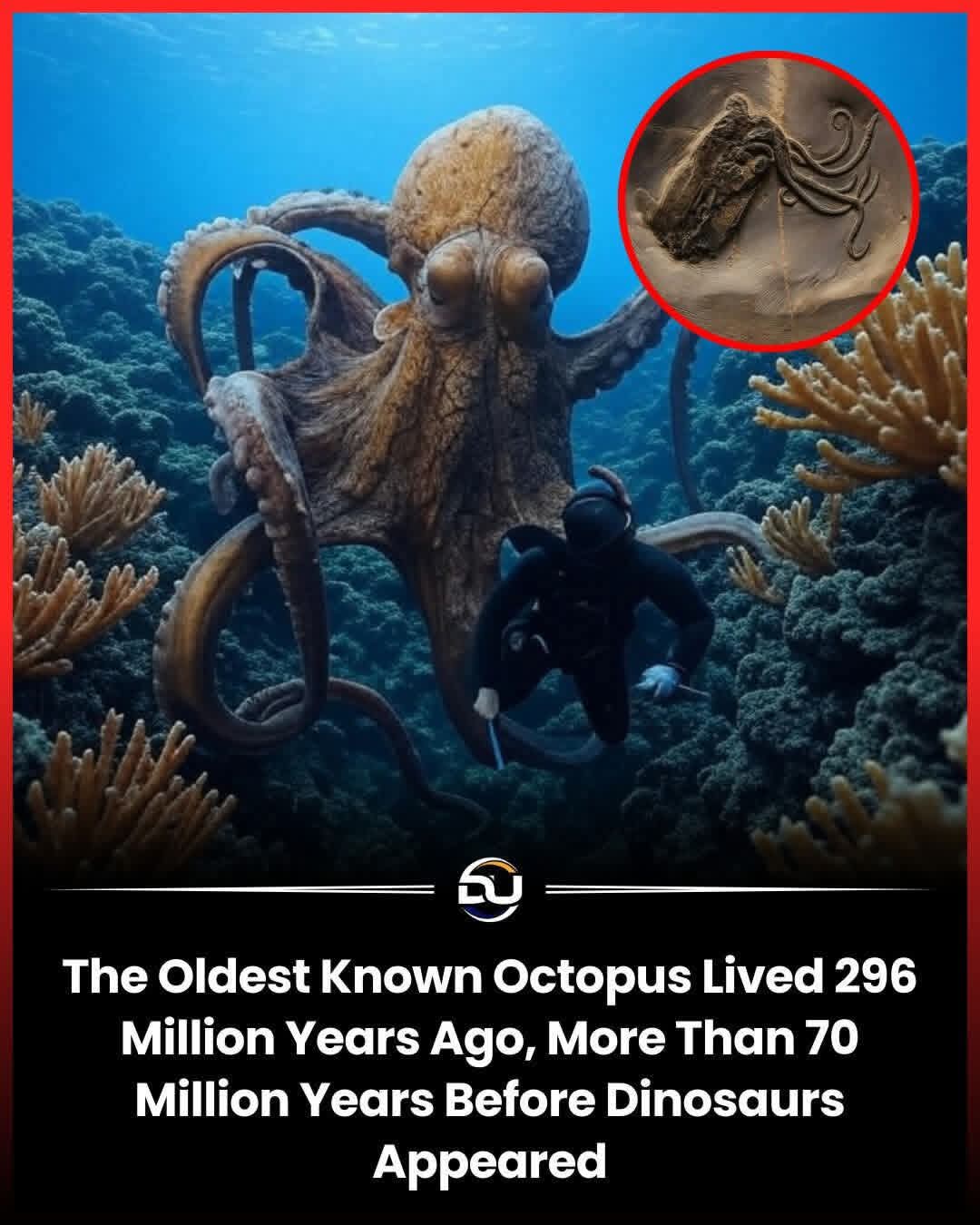
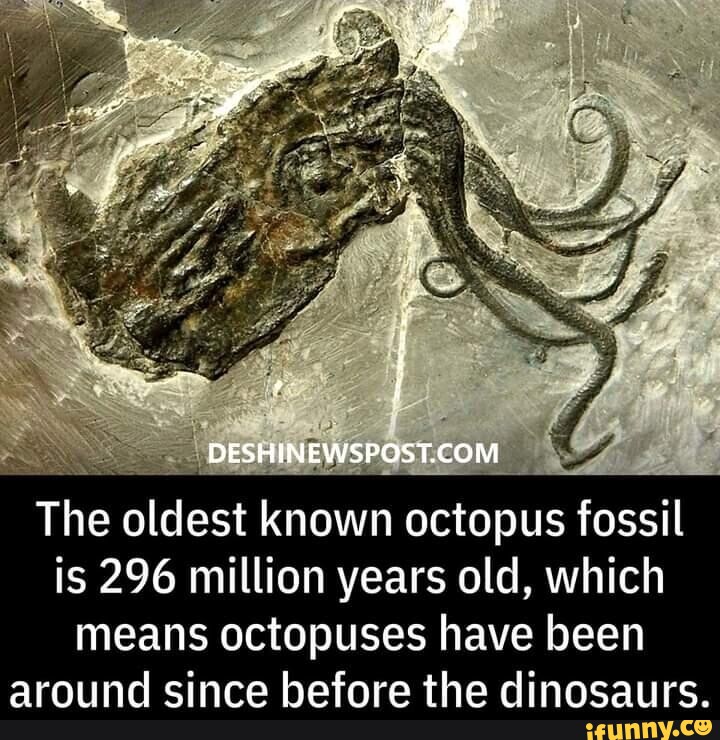
The story begins in the Mazon Creek fossil beds of Illinois, a site world-renowned for its exceptional preservation of soft-bodied organisms from the Carboniferous period, approximately 300 to 310 million years ago. Among the countless treasures pulled from these ironstone nodules was a specimen that appeared to possess the unmistakable hallmark of an octopus: a globular body and what looked like multiple arms.
For decades, this fossil, often associated with the genus Pohlsepia, was cited as the definitive evidence that octopuses had already diverged from their cephalopod relatives during the Paleozoic Era. At the time of its discovery, the specimen was hailed as a "missing link," suggesting that the blueprint for the modern octopus was far older than previously imagined. However, as imaging technology has advanced, so has our ability to peer into the microscopic structures of these ancient remains.
Advanced Imaging Challenges the Narrative
The recent study, led by a multi-disciplinary team of paleontologists and marine biologists, utilized high-resolution synchrotron scanning and chemical mapping. These tools allow scientists to see beyond the surface of the rock, identifying internal structures that are invisible to the naked eye. What they found was startling: the "arms" of the specimen lacked the complex muscular arrangement and sucker-attachment points characteristic of true octopuses.
Furthermore, the internal anatomy—specifically the lack of a "gladius" or a specific type of internal shell remnant found in early octopods—suggested a different lineage entirely. Instead of being an early octopus, the creature appears to be a more primitive form of cephalopod, or perhaps even a different type of mollusk that evolved a similar body plan through convergent evolution. Convergent evolution occurs when unrelated species develop similar traits because they occupy similar ecological niches, much like how dolphins and sharks share a streamlined shape despite being mammals and fish, respectively.
| Fitur/Aspek | Deskripsi |
|---|---|
| Original Classification | Primitive Octopod (Octopoda) |
| New Identification | Basal Vampyromorph or Stem-Cephalopod |
| Estimated Age | 300 - 320 Million Years (Carboniferous) |
| Primary Fossil Site | Mazon Creek, Illinois, USA |
| Key Technological Tool | Synchrotron X-ray Tomography |
| Missing Features | Complex suckers and specific muscular mantle structures |
If Not an Octopus, Then What?
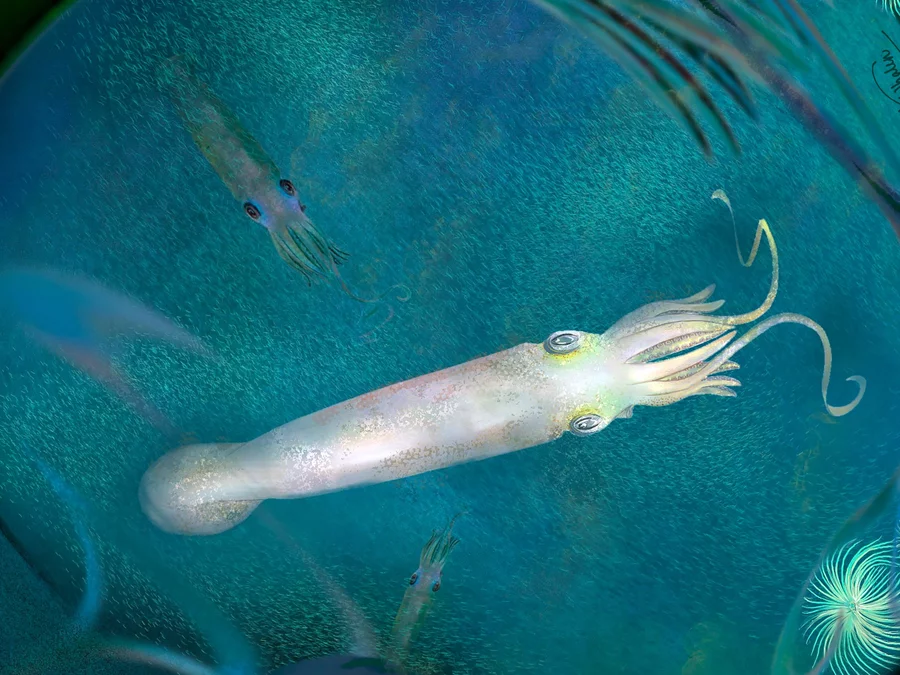
The reclassification of this fossil points toward it being a member of the "vampyromorph" group or an even more ancestral "stem" group of cephalopods. Vampyromorphs are a group that today includes only one living species: the Vampire Squid (Vampyroteuthis infernalis). Despite the name, the Vampire Squid is neither a squid nor an octopus, but a unique lineage that shares characteristics of both.
The Rise of the Vampyromorphs
Scientists now believe that many fossils previously categorized as early octopuses are actually early vampyromorphs. These creatures possessed ten arms, though two were often modified into sensory filaments. Over millions of years, the ancestors of true octopuses would eventually lose two of these arms entirely, resulting in the eight-armed creatures we recognize today. By re-identifying the "oldest octopus" as a vampyromorph, the confirmed date for the appearance of true octopuses moves forward in time, likely to the Jurassic period.
Implications for Cephalopod Evolution
This discovery forces scientists to recalibrate the "molecular clock"—a method used to estimate the time of divergence between species based on genetic mutation rates. If the fossil record for octopuses starts 100 million years later than we thought, it suggests that the rapid diversification of cephalopods occurred under different environmental pressures, perhaps linked to the "Mesozoic Marine Revolution," a period when predators like crabs and advanced fish forced soft-bodied prey to evolve new defense mechanisms.
The Challenges of Soft-Bodied Paleontology
Why was the mistake made in the first place? To understand this, one must appreciate the immense difficulty of studying ancient cephalopods. Unlike dinosaurs, which leave behind hard bones and teeth, octopuses are almost entirely soft tissue. Under normal conditions, they decay completely within days of death, leaving no trace.
Only in "Lagerstätten"—fossil sites with exceptional preservation conditions—can we find the outlines of these animals. In Mazon Creek, rapid burial in silty water and the formation of siderite nodules "locked" the shape of the creature in place. However, "shape" is not the same as "anatomy." Over millions of years, the chemical composition of the animal changes, and what looks like a tentacle might simply be a smear of organic carbon. This is why the latest technology is so vital; it allows us to distinguish between actual biological structures and geological artifacts.
Why This Matters for Science Today
Some might ask: "Does it really matter if a 300-million-year-old animal is an octopus or a vampyromorph?" For biologists and climatologists, the answer is a resounding yes. Understanding how cephalopods responded to past mass extinctions and climate shifts—such as those at the end of the Carboniferous—helps us predict how modern marine life might react to our current changing climate.
Octopuses are among the most adaptable creatures on Earth. By knowing exactly when they evolved their unique traits—like their decentralized nervous system and extreme camouflage—scientists can better understand the evolutionary "cost" and "benefit" of intelligence and flexibility in the animal kingdom.
FAQ: Understanding the ‘Oldest Octopus’ Correction
1. What was the name of the fossil previously thought to be the oldest octopus?
While several specimens have been debated, Pohlsepia mazonensis from the Mazon Creek area was one of the primary candidates for the "oldest octopus" title for many years. More recently, Syllipsimopodi bideni was also described as an ancient relative, though its exact position on the family tree remains a subject of intense scientific scrutiny.
2. How do scientists determine the difference between an octopus and a squid fossil?
Paleontologists look for specific markers: the number of arms, the presence of suckers vs. hooks, and the internal support structure. Octopuses have eight arms and either no internal shell or a very reduced one (stylets), whereas squids and their relatives have ten appendages and a pen-like internal structure called a gladius.
3. Does this mean there were no octopuses during the Carboniferous period?
Based on current confirmed fossil evidence, true octopuses (Order Octopoda) likely hadn't appeared yet. The creatures present during that time were ancestral forms—"cousins" to the octopus—that still retained features of their more primitive mollusk ancestors.
Conclusion: The Ever-Evolving Tree of Life
The discovery that the world’s "oldest octopus" is actually a different type of creature is a perfect example of the scientific method in action. Science is not a static collection of facts, but a continuous process of refinement. As our tools become more sophisticated, our vision of the past becomes clearer, often revealing a history that is far more complex and interesting than we initially suspected.
While the octopus may have lost its Carboniferous ancestor, the story of cephalopod evolution has gained a new chapter. We now see a more nuanced progression of life, where the ancestors of today’s ink-squirting masters of disguise spent millions of years refining their forms in ancient seas. This finding reminds us that the deep past, much like the deep ocean, still holds many secrets waiting to be uncovered by the next generation of researchers and the next leap in technology.
As we continue to explore the fossil record, we must remain open to the idea that what we know today may be rewritten tomorrow. After all, in the grand theater of evolution, the octopus and its relatives have always been the masters of change.
The ‘oldest octopus’ in the world isn’t an octopus after all, scientists find
The ‘oldest octopus’ in the world isn’t an octopus after all, scientists find Wallpapers
Collection of the ‘oldest octopus’ in the world isn’t an octopus after all, scientists find wallpapers for your desktop and mobile devices.
Crisp The ‘oldest Octopus’ In The World Isn’t An Octopus After All, Scientists Find Background Nature
A captivating the ‘oldest octopus’ in the world isn’t an octopus after all, scientists find scene that brings tranquility and beauty to any device.

Dynamic The ‘oldest Octopus’ In The World Isn’t An Octopus After All, Scientists Find Capture for Mobile
Find inspiration with this unique the ‘oldest octopus’ in the world isn’t an octopus after all, scientists find illustration, crafted to provide a fresh look for your background.

High-Quality The ‘oldest Octopus’ In The World Isn’t An Octopus After All, Scientists Find Picture Nature
Experience the crisp clarity of this stunning the ‘oldest octopus’ in the world isn’t an octopus after all, scientists find image, available in high resolution for all your screens.

Serene The ‘oldest Octopus’ In The World Isn’t An Octopus After All, Scientists Find Image in HD
Discover an amazing the ‘oldest octopus’ in the world isn’t an octopus after all, scientists find background image, ideal for personalizing your devices with vibrant colors and intricate designs.
Vibrant The ‘oldest Octopus’ In The World Isn’t An Octopus After All, Scientists Find Artwork Illustration
Explore this high-quality the ‘oldest octopus’ in the world isn’t an octopus after all, scientists find image, perfect for enhancing your desktop or mobile wallpaper.

Serene The ‘oldest Octopus’ In The World Isn’t An Octopus After All, Scientists Find Moment for Mobile
Discover an amazing the ‘oldest octopus’ in the world isn’t an octopus after all, scientists find background image, ideal for personalizing your devices with vibrant colors and intricate designs.
Breathtaking The ‘oldest Octopus’ In The World Isn’t An Octopus After All, Scientists Find Image Digital Art
Explore this high-quality the ‘oldest octopus’ in the world isn’t an octopus after all, scientists find image, perfect for enhancing your desktop or mobile wallpaper.
Gorgeous The ‘oldest Octopus’ In The World Isn’t An Octopus After All, Scientists Find Design for Your Screen
A captivating the ‘oldest octopus’ in the world isn’t an octopus after all, scientists find scene that brings tranquility and beauty to any device.

Detailed The ‘oldest Octopus’ In The World Isn’t An Octopus After All, Scientists Find Artwork in HD
Transform your screen with this vivid the ‘oldest octopus’ in the world isn’t an octopus after all, scientists find artwork, a true masterpiece of digital design.

Vibrant The ‘oldest Octopus’ In The World Isn’t An Octopus After All, Scientists Find Wallpaper Photography
Transform your screen with this vivid the ‘oldest octopus’ in the world isn’t an octopus after all, scientists find artwork, a true masterpiece of digital design.
Exquisite The ‘oldest Octopus’ In The World Isn’t An Octopus After All, Scientists Find Picture for Your Screen
A captivating the ‘oldest octopus’ in the world isn’t an octopus after all, scientists find scene that brings tranquility and beauty to any device.
Breathtaking The ‘oldest Octopus’ In The World Isn’t An Octopus After All, Scientists Find Wallpaper Concept
Discover an amazing the ‘oldest octopus’ in the world isn’t an octopus after all, scientists find background image, ideal for personalizing your devices with vibrant colors and intricate designs.
Vibrant The ‘oldest Octopus’ In The World Isn’t An Octopus After All, Scientists Find Abstract Photography
Explore this high-quality the ‘oldest octopus’ in the world isn’t an octopus after all, scientists find image, perfect for enhancing your desktop or mobile wallpaper.

Vibrant The ‘oldest Octopus’ In The World Isn’t An Octopus After All, Scientists Find Artwork Nature
Discover an amazing the ‘oldest octopus’ in the world isn’t an octopus after all, scientists find background image, ideal for personalizing your devices with vibrant colors and intricate designs.

Vivid The ‘oldest Octopus’ In The World Isn’t An Octopus After All, Scientists Find Moment for Mobile
Explore this high-quality the ‘oldest octopus’ in the world isn’t an octopus after all, scientists find image, perfect for enhancing your desktop or mobile wallpaper.

Crisp The ‘oldest Octopus’ In The World Isn’t An Octopus After All, Scientists Find View for Mobile
This gorgeous the ‘oldest octopus’ in the world isn’t an octopus after all, scientists find photo offers a breathtaking view, making it a perfect choice for your next wallpaper.

Mesmerizing The ‘oldest Octopus’ In The World Isn’t An Octopus After All, Scientists Find Capture for Your Screen
Explore this high-quality the ‘oldest octopus’ in the world isn’t an octopus after all, scientists find image, perfect for enhancing your desktop or mobile wallpaper.

Gorgeous The ‘oldest Octopus’ In The World Isn’t An Octopus After All, Scientists Find Scene in HD
This gorgeous the ‘oldest octopus’ in the world isn’t an octopus after all, scientists find photo offers a breathtaking view, making it a perfect choice for your next wallpaper.

Gorgeous The ‘oldest Octopus’ In The World Isn’t An Octopus After All, Scientists Find View for Desktop
Find inspiration with this unique the ‘oldest octopus’ in the world isn’t an octopus after all, scientists find illustration, crafted to provide a fresh look for your background.

Captivating The ‘oldest Octopus’ In The World Isn’t An Octopus After All, Scientists Find Abstract Illustration
This gorgeous the ‘oldest octopus’ in the world isn’t an octopus after all, scientists find photo offers a breathtaking view, making it a perfect choice for your next wallpaper.
Download these the ‘oldest octopus’ in the world isn’t an octopus after all, scientists find wallpapers for free and use them on your desktop or mobile devices.