Fuel crisis: Which foods will rise in price fastest, and when?
Fuel crisis: Which foods will rise in price fastest, and when?
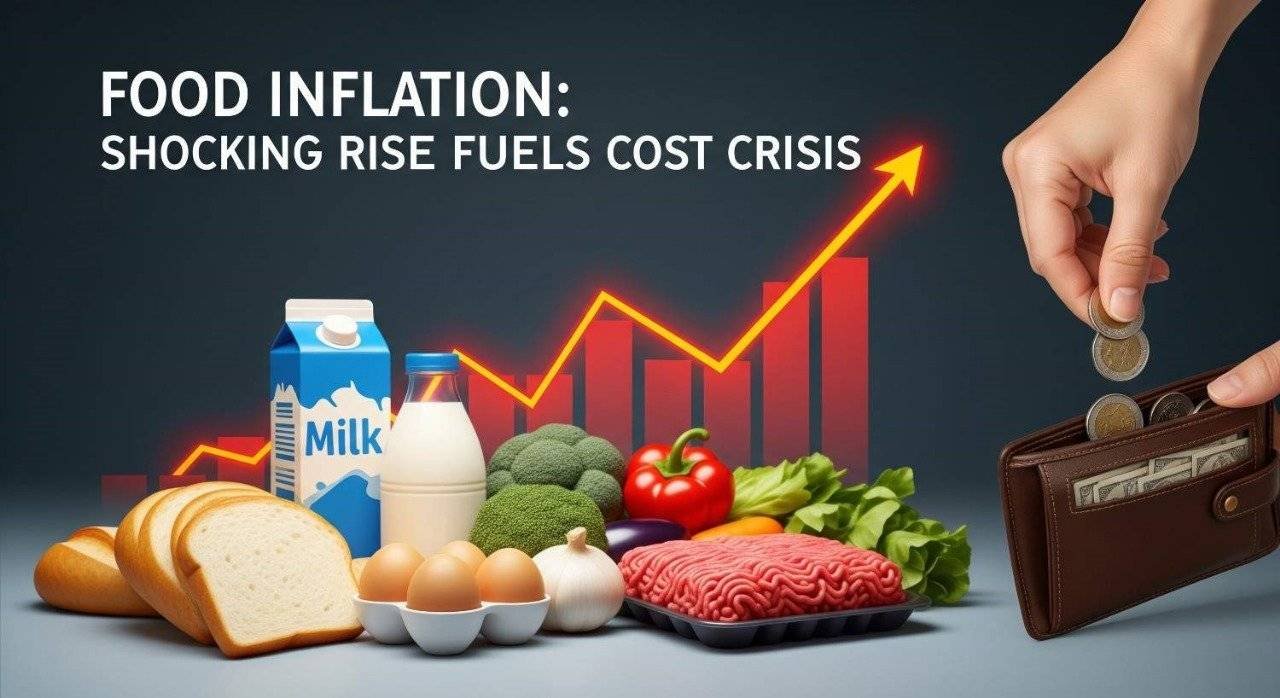
The global food supply chain is currently facing a massive shock as rising fuel prices and energy shortages ripple through every stage of production, from the farm to the supermarket shelf. With oil prices surging past $100 a barrel following the recent conflict in the Middle East and the effective closure of the Strait of Hormuz, consumers are bracing for significant increases in their weekly grocery bills. Experts warn that because modern agriculture is so deeply dependent on fossil fuels for fertilizer, machinery, and logistics, a sustained fuel crisis will inevitably translate into higher food costs and potential shortages in vulnerable regions.
Featured Snippet: The foods likely to rise in price fastest during a fuel crisis are those with high energy-intensive production and transportation requirements, specifically fresh produce (horticulture), seafood (fishing), and meat products. Seafood is highly vulnerable because fuel accounts for up to 25% of its input costs. Consumers can expect to see these price increases on shelves within two to six months, as transportation surcharges and higher fertilizer costs filter through the supply chain. Global staples like bread, pasta, and dairy are also at high risk due to their reliance on nitrogen-based fertilizers derived from natural gas.
The Direct Link Between Fossil Fuels and Food Costs
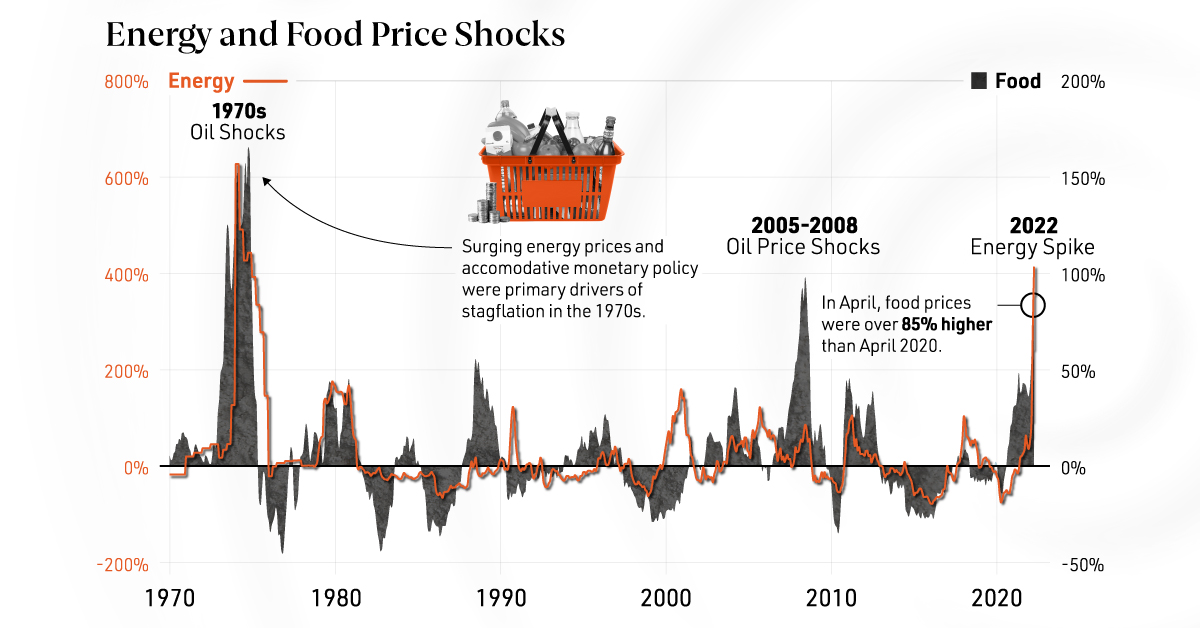
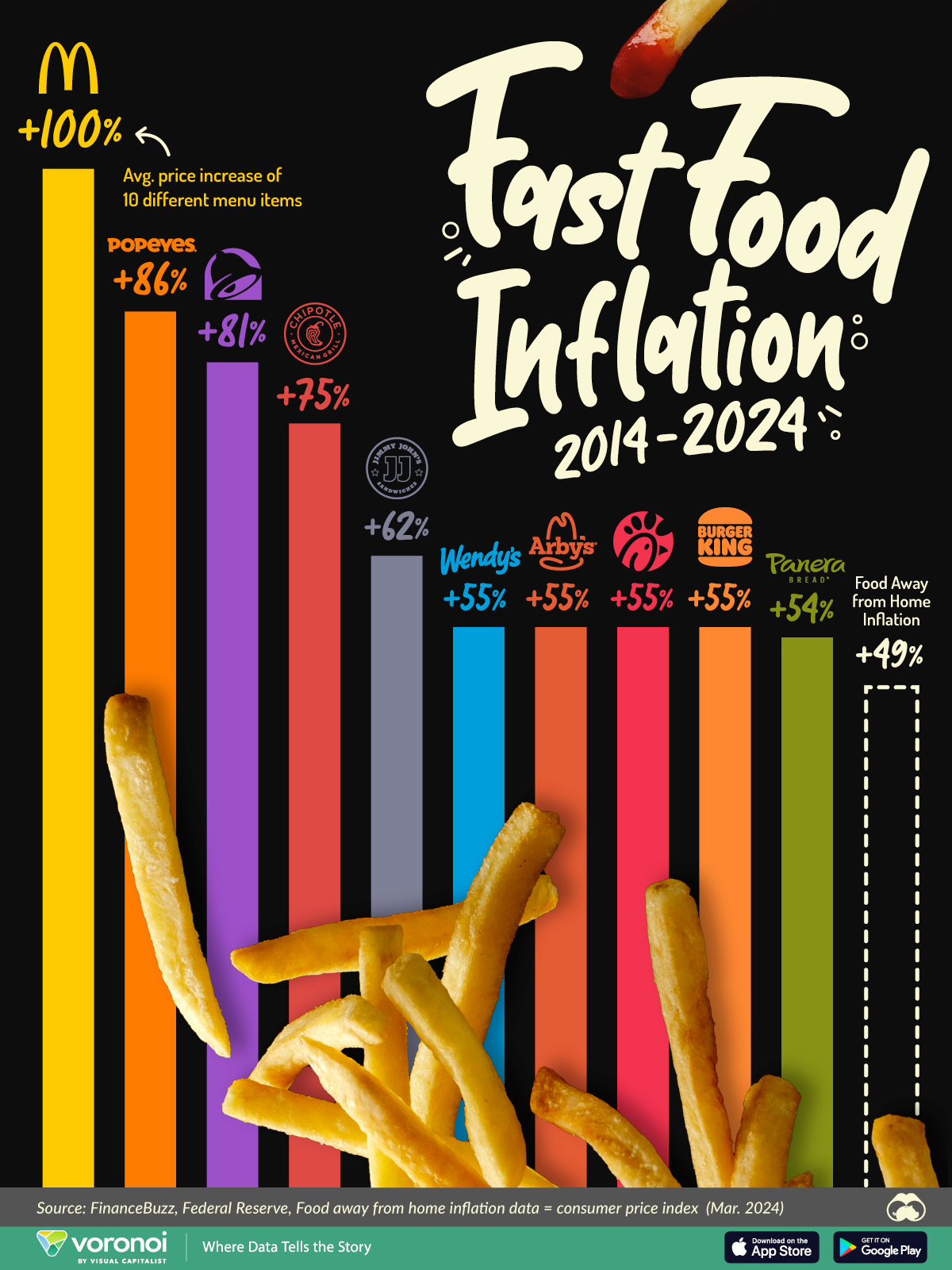
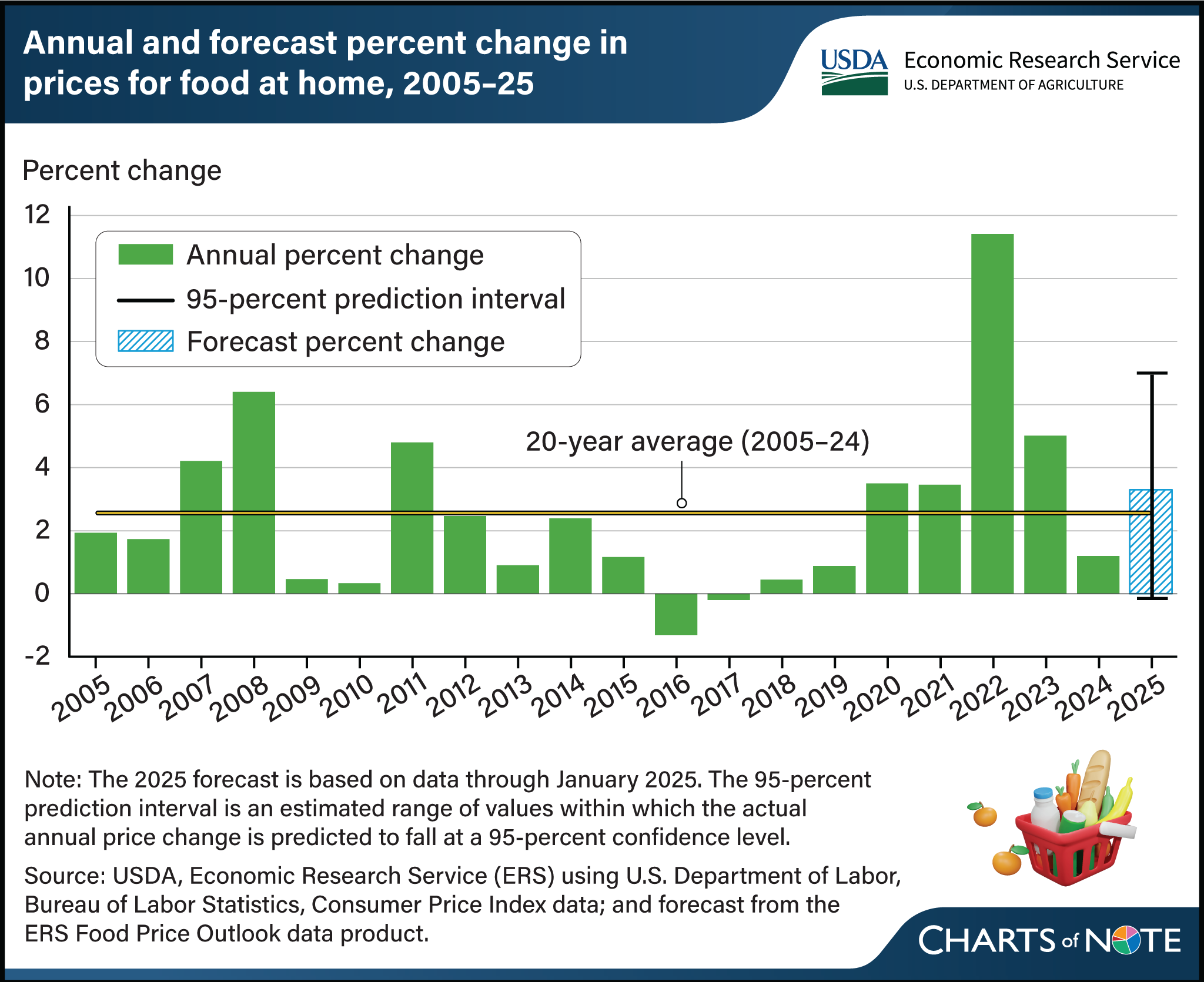
Fossil fuels are the lifeblood of the modern industrial food system. In advanced economies like the United States, direct and indirect energy costs—including oil and natural gas—can account for up to 50 percent of the total variable costs for food production. When fuel prices swing, the entire cost structure of the food industry shifts. This relationship is often referred to as food and energy prices moving in "lockstep." From the diesel used to power heavy farm machinery to the natural gas required to synthesize nitrogen fertilizers, every calorie of food produced today is essentially backed by a significant investment of fossil fuel energy.
The impact is not just limited to the farm. Food processing is an incredibly energy-intensive industry. Cooking, freezing, packaging, and preserving food requires massive amounts of electricity and gas. As energy bills for manufacturing plants rise, those costs are passed down to retailers and eventually to the consumer. This creates a "ringing bell" effect where a spike in crude oil prices leads to a series of inflationary echoes across the economy, hitting the most essential goods first.
Seafood and Fishing: The Front Line of Price Spikes
Among all food sectors, the fishing industry is perhaps the most immediately exposed to fuel price fluctuations. Commercial fishing vessels rely almost exclusively on marine diesel to operate, and for many fleets, fuel represents their single largest operating expense. In some regions, fuel can account for as much as 25 percent of the total input costs for the fishing sector. When the price of diesel jumps, fishing boats may stay in port because the cost of the trip exceeds the potential value of the catch, leading to immediate supply reductions and rapid price increases for fresh fish.
Because seafood is often highly perishable and relies on rapid, temperature-controlled transport (often involving air freight for high-end products), it is hit by a double whammy of high production fuel costs and high transportation fuel costs. This makes it one of the first categories where consumers will notice a "fuel surcharge" or a direct price hike at the fish counter.
Horticulture and the Cost of Fresh Produce
The horticulture sector, which includes fruits and vegetables, is another high-risk area. Modern vegetable production often requires intensive irrigation, climate-controlled greenhouses, and specialized harvesting equipment—all of which are energy-dependent. In countries like New Zealand and parts of Europe, horticulture spends about 5 percent of its total costs on oil-based fuels for heating and machinery. Furthermore, fresh produce is heavy and has a high water content, making it expensive to transport from fields to urban centers.
Climate change acts as a "threat multiplier" in this regard. As extreme weather events like droughts in California or hurricanes in Florida destroy crops, farmers are forced to invest more in irrigation and protective infrastructure, further driving up energy use and production costs. The jump in U.S. vegetable producer prices in late 2022, which saw an 80 percent increase due to regional droughts, serves as a stark reminder of how fragile the supply of fresh greens can be when environmental and energy pressures collide.
The Fertilizer Crisis: Why Bread and Grains Are at Risk
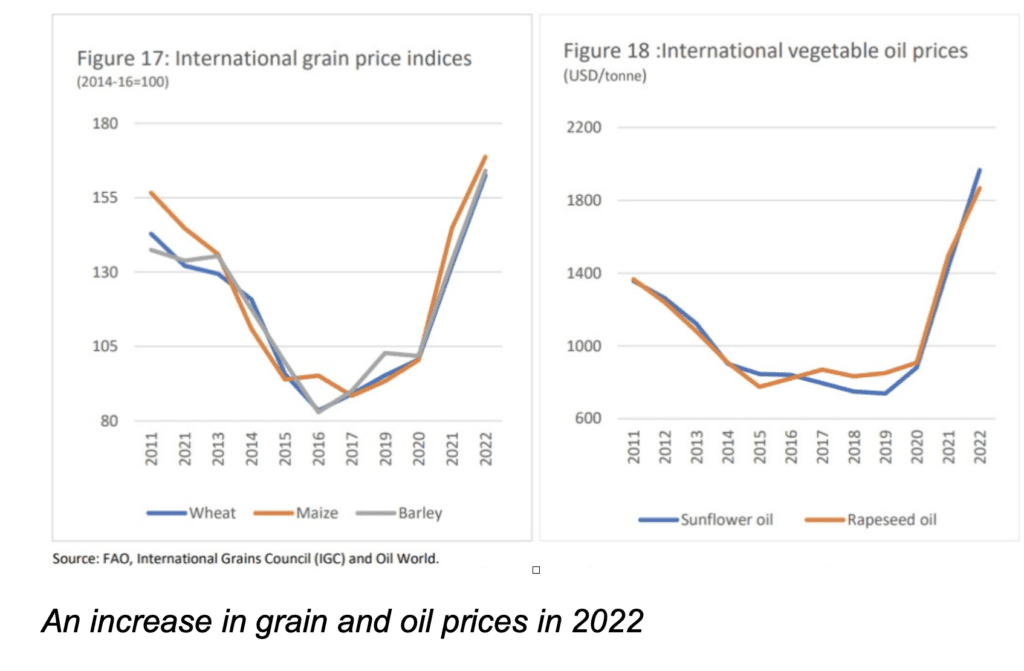
While fuel prices affect transportation, natural gas prices dictate the cost of fertilizer. Synthetic nitrogen fertilizer is produced using the Haber-Bosch process, which requires vast amounts of natural gas. It is estimated that roughly half of global food production depends on these synthetic fertilizers. The closure of the Strait of Hormuz has disrupted the transport of ammonia, nitrogen, and sulfur—vital ingredients for the global fertilizer market. Consequently, benchmark prices for fertilizers like Egyptian urea have risen by more than 45 percent in recent weeks.
This has a lagging but profound effect on the price of staples like bread, pasta, and potatoes. Farmers currently facing high fertilizer costs may choose to plant less or use less fertilizer, which reduces crop yields. These lower yields will eventually manifest as higher prices for grains on global markets. For lower-income countries that rely heavily on grain imports, this can quickly lead from price inflation to actual food shortages and increased hunger.
| Food Category | Estimated Fuel/Energy Input Cost % |
|---|---|
| Commercial Fishing | 25% |
| Horticulture (Fruits & Vegetables) | 5% - 10% |
| Dairy and Cereals (Retail Variability) | Up to 24% |
| General Farming (Sheep, Beef) | 3% - 4% |
Meat and Dairy: The Compounding Effect of Logistics
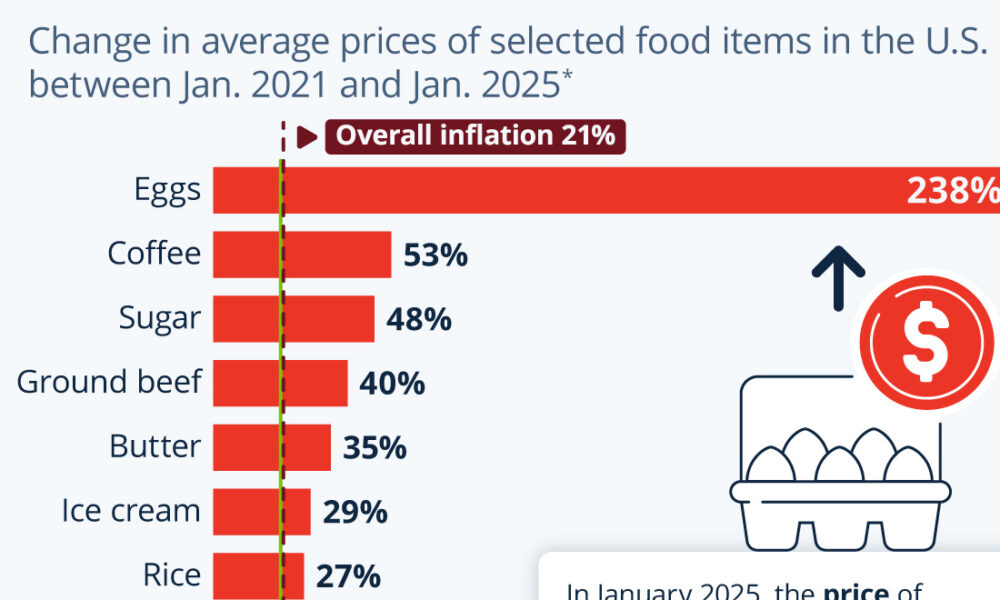
The meat and dairy industries are also highly susceptible to fuel crises, though the impact is often more complex. Livestock farming requires fuel for moving animals, operating milking parlors, and, most importantly, producing or transporting animal feed. When the price of corn and soybeans rises due to high fertilizer and fuel costs, the cost of raising cattle, pigs, and poultry rises accordingly. In the U.S., beef and veal prices are already projected to increase by over 11 percent due to a combination of drought-depleted herds and rising input costs.
Logistics plays a massive role here as well. Meat processing plants spend about 10 percent of their non-wage costs on transport. Since these products must be kept in a "cold chain"—refrigerated trucks and warehouses that run 24/7—any increase in electricity or diesel prices adds a constant upward pressure on the final retail price. Supermarkets, too, see their margins squeezed by the cost of running massive refrigeration units, leading to broader price adjustments across the dairy aisle.
Global Supply Chain Disruptions and Shipping Surcharges
The current conflict in the Middle East has created an unprecedented "dual chokepoint" for global transport. With the Strait of Hormuz effectively closed, ships are being forced to take longer, more expensive routes. Fuel prices account for 50 to 60 percent of the total operating cost of shipping goods by sea. As these costs rise, shipping companies implement fuel surcharges that affect everything from imported coffee and cocoa to packaged goods. Items that travel "halfway around the world" are naturally more vulnerable than locally produced goods.
Economists warn that these transportation costs often have a "lead time" or lag. While gas prices at the pump jump almost instantly, it can take two to six months for the full weight of increased shipping and production costs to reach the consumer. This means that even if the fuel crisis were resolved today, the "inflationary pulse" would continue to move through the food system for the remainder of the year.
Stagflation Fears and the Economic Outlook
The convergence of high energy prices and rising food costs is reviving fears of "stagflation"—a period of stagnant economic growth combined with high inflation. Historically, major oil shocks in 1973, 1978, and 2008 have been followed by global recessions. For the average consumer, this means that while their groceries are getting more expensive, their purchasing power is staying the same or even decreasing. In lower-income countries, the situation is even more dire, as a larger percentage of household income is spent on food, leaving no room to absorb these price shocks.
The World Food Programme (WFP) has already issued warnings that surging fuel prices are jeopardizing humanitarian efforts and pushing millions more toward severe food insecurity. As transport costs rise, the cost of delivering aid also increases, meaning the same amount of funding now feeds fewer people. The economic toll is not just a domestic issue for developed nations; it is a burgeoning global crisis that threatens to undo years of progress in reducing world hunger.
How Consumers Can Prepare for Rising Food Prices
While individual consumers have little control over global oil markets, there are ways to mitigate the impact of the fuel crisis on their personal budgets. Prioritizing locally grown, seasonal produce can reduce the "transportation premium" added to imported goods. Buying in bulk for non-perishable staples like rice and beans before the full impact of fertilizer costs hits the market can also provide a buffer. Additionally, reducing food waste becomes an economic necessity when every item in the cart represents a larger portion of the household budget.
Ultimately, the resilience of the food system depends on its ability to decouple from fossil fuel volatility. This includes investing in renewable energy for farms, developing more efficient logistics networks, and exploring organic or precision-farming techniques that reduce reliance on synthetic fertilizers. Until such transitions are widespread, the dinner table will remain at the mercy of the global oil market.
Frequently Asked Questions
1. Why do fuel prices affect food prices so directly?
Fuel is used at every stage of food production: for farm machinery, for the production of fertilizers, for processing and packaging, and finally for transporting the goods to the store. When fuel costs rise, these expenses are passed down the chain.
2. Which specific food item will likely see the fastest price increase?
Fresh seafood and highly perishable vegetables are usually the first to rise because they have high transportation costs and immediate energy needs for fishing or climate-controlled farming.
3. How long does it take for a fuel spike to hit grocery store shelves?
While gas prices change daily, food prices usually see a lag of two to six months as existing contracts expire and the higher costs of current production and transport cycles reach the retail level.
4. Does the price of natural gas affect food differently than oil?
Yes. While oil primarily affects transportation and machinery, natural gas is the primary raw material for nitrogen fertilizer. High natural gas prices specifically drive up the cost of grains and staples like bread.
5. Can local food avoid these price hikes?
Local food may avoid international shipping surcharges, but it is still subject to the costs of local diesel for tractors and the global price of fertilizer, so it is rarely completely immune to a fuel crisis.
Conclusion
The current fuel crisis is a stark reminder of the interconnectedness of our global economy. As energy costs soar due to geopolitical instability and supply chain chokepoints, the impact is felt most acutely at the grocery store. Seafood, fresh produce, and grain-based staples are the most vulnerable categories, with price increases expected to build throughout the year. For consumers, navigating this period will require a combination of budget conscious shopping and an awareness of the "hidden" energy costs in the food they buy. In the long term, the stability of our food supply will depend on reducing its dependence on the volatile fossil fuel market.
Fuel crisis: Which foods will rise in price fastest, and when?
Fuel crisis: Which foods will rise in price fastest, and when? Wallpapers
Collection of fuel crisis: which foods will rise in price fastest, and when? wallpapers for your desktop and mobile devices.
Lush Fuel Crisis: Which Foods Will Rise In Price Fastest, And When? Image Concept
This gorgeous fuel crisis: which foods will rise in price fastest, and when? photo offers a breathtaking view, making it a perfect choice for your next wallpaper.
High-Quality Fuel Crisis: Which Foods Will Rise In Price Fastest, And When? Capture Nature
Experience the crisp clarity of this stunning fuel crisis: which foods will rise in price fastest, and when? image, available in high resolution for all your screens.

Crisp Fuel Crisis: Which Foods Will Rise In Price Fastest, And When? Image Collection
A captivating fuel crisis: which foods will rise in price fastest, and when? scene that brings tranquility and beauty to any device.

Vivid Fuel Crisis: Which Foods Will Rise In Price Fastest, And When? Design for Mobile
Transform your screen with this vivid fuel crisis: which foods will rise in price fastest, and when? artwork, a true masterpiece of digital design.
Dynamic Fuel Crisis: Which Foods Will Rise In Price Fastest, And When? Capture Collection
This gorgeous fuel crisis: which foods will rise in price fastest, and when? photo offers a breathtaking view, making it a perfect choice for your next wallpaper.

Breathtaking Fuel Crisis: Which Foods Will Rise In Price Fastest, And When? Abstract Illustration
Explore this high-quality fuel crisis: which foods will rise in price fastest, and when? image, perfect for enhancing your desktop or mobile wallpaper.

Crisp Fuel Crisis: Which Foods Will Rise In Price Fastest, And When? Photo in 4K
This gorgeous fuel crisis: which foods will rise in price fastest, and when? photo offers a breathtaking view, making it a perfect choice for your next wallpaper.
Gorgeous Fuel Crisis: Which Foods Will Rise In Price Fastest, And When? Design Digital Art
Immerse yourself in the stunning details of this beautiful fuel crisis: which foods will rise in price fastest, and when? wallpaper, designed for a captivating visual experience.
Beautiful Fuel Crisis: Which Foods Will Rise In Price Fastest, And When? Scene Nature
Discover an amazing fuel crisis: which foods will rise in price fastest, and when? background image, ideal for personalizing your devices with vibrant colors and intricate designs.
Breathtaking Fuel Crisis: Which Foods Will Rise In Price Fastest, And When? Artwork Art
Discover an amazing fuel crisis: which foods will rise in price fastest, and when? background image, ideal for personalizing your devices with vibrant colors and intricate designs.
Gorgeous Fuel Crisis: Which Foods Will Rise In Price Fastest, And When? Photo Art
This gorgeous fuel crisis: which foods will rise in price fastest, and when? photo offers a breathtaking view, making it a perfect choice for your next wallpaper.
Vivid Fuel Crisis: Which Foods Will Rise In Price Fastest, And When? Capture Collection
Discover an amazing fuel crisis: which foods will rise in price fastest, and when? background image, ideal for personalizing your devices with vibrant colors and intricate designs.
Beautiful Fuel Crisis: Which Foods Will Rise In Price Fastest, And When? Scene Collection
Experience the crisp clarity of this stunning fuel crisis: which foods will rise in price fastest, and when? image, available in high resolution for all your screens.
Mesmerizing Fuel Crisis: Which Foods Will Rise In Price Fastest, And When? Capture for Mobile
Transform your screen with this vivid fuel crisis: which foods will rise in price fastest, and when? artwork, a true masterpiece of digital design.

Mesmerizing Fuel Crisis: Which Foods Will Rise In Price Fastest, And When? Background Photography
Transform your screen with this vivid fuel crisis: which foods will rise in price fastest, and when? artwork, a true masterpiece of digital design.

Artistic Fuel Crisis: Which Foods Will Rise In Price Fastest, And When? Scene Digital Art
Immerse yourself in the stunning details of this beautiful fuel crisis: which foods will rise in price fastest, and when? wallpaper, designed for a captivating visual experience.
Breathtaking Fuel Crisis: Which Foods Will Rise In Price Fastest, And When? View for Mobile
Experience the crisp clarity of this stunning fuel crisis: which foods will rise in price fastest, and when? image, available in high resolution for all your screens.

Spectacular Fuel Crisis: Which Foods Will Rise In Price Fastest, And When? Capture Nature
Immerse yourself in the stunning details of this beautiful fuel crisis: which foods will rise in price fastest, and when? wallpaper, designed for a captivating visual experience.
Detailed Fuel Crisis: Which Foods Will Rise In Price Fastest, And When? View in HD
Transform your screen with this vivid fuel crisis: which foods will rise in price fastest, and when? artwork, a true masterpiece of digital design.
High-Quality Fuel Crisis: Which Foods Will Rise In Price Fastest, And When? Abstract Collection
Experience the crisp clarity of this stunning fuel crisis: which foods will rise in price fastest, and when? image, available in high resolution for all your screens.
Download these fuel crisis: which foods will rise in price fastest, and when? wallpapers for free and use them on your desktop or mobile devices.