Oil Prices Spike to Over $110 a Barrel, Highest Since Pandemic
Oil Prices Spike to Over $110 a Barrel, Highest Since Pandemic
The global energy landscape has been thrust into a state of high alert as crude oil prices surged past the $110 per barrel mark this week, reaching levels not seen since the height of the post-pandemic supply crunch in 2022. Driven by an escalating military conflict in the Middle East involving the United States, Israel, and Iran, the sudden spike has sent shockwaves through international financial markets and reignited fears of a sustained inflationary spiral. As the Strait of Hormuz—a vital artery for one-fifth of the world's oil supply—faces unprecedented disruptions, traders and economists are bracing for a potential energy shock that could redefine global economic recovery in 2026. The volatility underscores the extreme sensitivity of energy benchmarks to geopolitical instability, with Brent crude hitting intraday highs near $120 before stabilizing in the triple-digit range.
Oil prices spike to over $110 a barrel, marking the highest level since the pandemic-era peaks of 2022. The primary driver is the conflict in the Middle East, specifically military actions near the Strait of Hormuz which have restricted global supply. Analysts identify this as the most significant energy market shock in years, with West Texas Intermediate (WTI) and Brent crude both experiencing double-digit percentage gains within a single trading week. The surge is impacting everything from domestic gasoline prices, which have jumped nearly 50 cents per gallon in the U.S., to global stock indices, which have seen significant retreats as investors weigh the risks of higher energy costs on corporate earnings and consumer spending.
The Geopolitical Catalyst: Conflict in the Middle East
The immediate trigger for the current price explosion is the widening military confrontation in West Asia. Following a series of strategic strikes on Iranian fuel depots and energy infrastructure by U.S. and Israeli forces, the region has descended into a state of open conflict. These operations, which began in late February 2026, were designed to neutralize perceived threats but have had the immediate side effect of paralyzing one of the world's most productive oil-producing zones. Reports of massive explosions in Tehran and fires at key refineries like Bapco in Bahrain have created a narrative of supply scarcity that the market has been quick to price in.
Military analysts suggest that the intensity of the current conflict is unlike previous skirmishes. The targeting of "downstream" assets—refineries and storage facilities—means that even if crude production remains stable, the ability to process and export that oil is severely compromised. Iran's retaliatory warnings, including threats to strike broader regional energy infrastructure, have added a "fear premium" to every barrel of oil traded on the NYMEX and ICE exchanges. This geopolitical risk factor is currently estimated to account for $20 to $30 of the current per-barrel price.
Furthermore, the involvement of the United States in direct military action has complicated the diplomatic landscape. While the Trump administration has characterized the moves as necessary for long-term global security, the short-term economic reality is a restricted market. As the war enters its second week, the lack of a clear exit strategy or ceasefire agreement suggests that the risk to supply remains skewed to the upside, keeping prices firmly above the $100 psychological threshold.
Strait of Hormuz: The World's Energy Chokepoint
At the heart of the current crisis is the Strait of Hormuz, a narrow waterway between Oman and Iran that serves as the only sea passage from the Persian Gulf to the open ocean. Approximately 21 million barrels of oil pass through this strait every day, representing about 21% of global petroleum liquids consumption. The current conflict has effectively brought tanker traffic to a standstill, as shipping companies refuse to enter the high-risk zone and insurance premiums for hulls and cargo skyrocket to prohibitive levels.
The closure or significant restriction of the Strait of Hormuz is often described by economists as a "doomsday scenario" for the global economy. Unlike the disruption caused by the Suez Canal blockage in 2021, the current situation is governed by active kinetic warfare rather than a logistical accident. This makes it far more difficult for the international community to intervene or find alternative routes. While Saudi Arabia and the UAE have pipelines that can bypass the strait to some extent, these lack the capacity to replace the massive volumes typically transported by sea.
Traders are particularly concerned about the duration of this bottleneck. If the strait remains contested for weeks, the global "just-in-time" supply chain for energy will begin to fail. Already, refineries in Asia—which are heavily dependent on Gulf crude—are reporting dwindling stockpiles and are scouting for alternative supplies from West Africa and the United States. This competition for "non-Gulf" oil is further inflating prices globally, as every available barrel of Brent-quality crude is now being bid up by desperate importers.
Comparative Analysis: Highest Levels Since the Pandemic
To understand the gravity of the $110 price point, one must look back to the early months of 2022. Following Russia's invasion of Ukraine, oil prices briefly touched $139 a barrel as the West moved to sanction Russian energy exports. The current rally is the first time since that volatile period that the market has sustained such high valuations. During the intervening years, prices had largely stabilized between $70 and $90, aided by increased U.S. shale production and a cooling Chinese economy. However, the current shock has effectively erased four years of market stability in less than ten days.
The current situation differs from the 2022 crisis in its concentration. While the Russia-Ukraine war impacted a major global producer, the current conflict threatens the very transit routes of the world's most concentrated oil region. In 2022, Russian oil continued to flow to markets like India and China, albeit at a discount. In the 2026 scenario, the physical inability to move oil out of the Persian Gulf creates a absolute supply void that cannot be easily mitigated by redirecting trade flows. This is why some analysts, including those at Goldman Sachs, warn that the current shock is "17 times larger" in potential impact than the peak disruption of the Ukraine war.
Historically, when oil exceeds $100 for an extended period, it triggers a "demand destruction" phase where high costs force consumers and businesses to reduce usage. However, in a post-pandemic world where travel and shipping have become essential components of the global recovery, the threshold for demand destruction may be higher than in the past. This suggests that prices could potentially climb much further—perhaps toward the all-time record of $147 set in 2008—before the market finds a new equilibrium.
Global Market Reaction: Stock Exchanges in Turmoil
Financial markets have reacted to the oil spike with predictable volatility. Stock exchanges in Tokyo, Seoul, and Hong Kong—all representing major oil-importing nations—suffered some of their worst single-day losses of the decade this week. The Topix index in Japan fell by more than 5%, while South Korean markets lost 6%. Investors are pricing in higher input costs for manufacturers and a significant hit to consumer discretionary spending as "gasoline fever" takes hold.
In the United States, the S&P 500 and Dow Jones Industrial Average have also faced selling pressure, though certain sectors like Energy have outperformed the broader market. The "fear gauge," or VIX, has spiked as traders move into safe-haven assets like gold and the U.S. dollar. The strength of the dollar is ironically making the situation worse for many emerging markets, as oil is priced in greenbacks, making it even more expensive for countries with weakening local currencies to purchase the fuel they need to keep their economies running.
There is also growing concern regarding the "contagion" effect. High energy prices typically lead to higher transport costs, which in turn drive up the price of food and consumer goods. This "second-round" effect is what equity investors fear most, as it could force central banks to maintain high interest rates even as the economy slows down—a classic recipe for stagflation. The current market narrative has shifted from "soft landing" to "geopolitical risk management" almost overnight.
Impact on Consumers: Gasoline and Diesel Price Surges
For the average citizen, the surge in crude oil is felt most acutely at the pump. In the United States, the national average for a gallon of regular gasoline has climbed to $3.45, a 47-cent increase in a single week. Diesel, the lifeblood of the trucking and shipping industry, has seen even more dramatic moves, rising over 80 cents in the same period. These increases are among the fastest ever recorded by the AAA motor club, reflecting the speed at which the wholesale market is passing costs down to the retail level.
The impact is even more severe in Europe and Asia. In the United Kingdom and the European Union, where fuel taxes are higher and reliance on imports is significant, energy bills for households are expected to rise by as much as 20% if current crude prices persist. Natural gas, often linked to oil market sentiment, has also spiked, particularly in Europe where prices rose 64% following the start of the Iran conflict. This creates a dual burden for consumers who are already struggling with the cost of living.
Transportation and logistics companies are already beginning to implement "fuel surcharges" to protect their margins. This means that even consumers who don't drive will likely see the impact of $110 oil in the form of higher prices for groceries, online deliveries, and public transport. The psychological impact of seeing gasoline prices rise so rapidly can also lead to a pullback in other areas of spending, potentially slowing down the broader retail economy during a critical midterm election year in the U.S.
| Global Event / Period | Peak Oil Price (USD/Barrel) |
|---|---|
| 2008 Commodity Boom | $147.50 |
| 2011 Arab Spring | $127.00 |
| 2022 Russia-Ukraine War | $139.13 |
| March 2026 Iran Conflict (Current) | $119.48 (Intraday) |
| 2020 COVID-19 Pandemic Low | $15.98 |
Inflationary Pressure and Central Bank Dilemmas
The sudden surge in energy costs has completely upended the inflation forecasts of major central banks. At the start of 2026, many economists expected the Federal Reserve and the European Central Bank to begin a cycle of interest rate cuts as pandemic-era inflation finally retreated toward target levels. However, with oil at $110, those plans are now in jeopardy. Rising energy costs are a "cost-push" inflationary force that central banks find difficult to control with interest rates alone, yet they cannot ignore the impact on inflation expectations.
In the U.S., inflation expectations for the next twelve months have jumped from 2.3% to 4.5% in just a few days. This puts the Federal Reserve in a precarious position: if they cut rates to support a slowing economy, they risk letting inflation run out of control. If they hold rates high to combat energy-driven inflation, they risk pushing the country into a recession. This "dilemma" is currently the most discussed topic among institutional investors and policy makers.
Furthermore, the global nature of this shock means that central banks cannot act in isolation. If the ECB cuts rates while the Fed stays high, the Euro could weaken further, making oil imports even more expensive for European nations. The lack of a coordinated global monetary response to the energy spike adds another layer of uncertainty to an already fragile economic environment. For now, the "wait and see" approach seems to be the default, but the window for a painless resolution is closing rapidly as prices remain elevated.
Political Fallout: The Trump Administration and Democratic Responses
The oil price surge has become a central theme in U.S. domestic politics. President Donald Trump has largely sought to downplay the significance of the $110 price point, describing it on social media as a "short-term" consequence of a necessary military action. He has argued that the destruction of Iran's nuclear threat is a "small price to pay" for long-term security. However, this rhetoric is being tested by the reality of $3.50+ gasoline, which historically has been a "third rail" in American politics.
Democrats have seized on the data to hammer the administration on the "affordability crisis." Leaders like Senator Chuck Schumer have called for an immediate release of oil from the Strategic Petroleum Reserve (SPR) to dampen prices. They argue that the administration failed to plan for the predictable economic fallout of a war in the Middle East and that working families are being "crushed" by the cost of fuel and groceries. The political stakes are high, with midterm elections approaching and energy security at the top of the voter priority list.
The administration's response has included hints of a "Navy escort" for tankers in the Strait of Hormuz to restore confidence and lower insurance costs. Energy Secretary Chris Wright has expressed confidence that prices will return to "under $3" before too long, suggesting that the supply disruption is a "weeks, not months" event. Whether this optimistic timeline holds remains to be seen, but the political pressure to act is mounting with every cent the national gas average rises.
Future Outlook: Will Prices Hit $150 or Recede?
As we look toward the rest of 2026, the trajectory of oil prices remains entirely dependent on the duration and intensity of the Middle East conflict. If the Strait of Hormuz remains contested and Iran continues to target regional energy assets, analysts from Goldman Sachs and other major banks suggest that $150 per barrel is not only possible but likely. This would surpass the all-time record and likely trigger a global recession as the cost of energy becomes unsustainable for most economies.
On the other hand, there are factors that could lead to a rapid retreat. The G7 nations have already indicated they are "standing ready" to release strategic reserves. A coordinated release of millions of barrels of oil could provide a temporary ceiling for prices. Additionally, if the U.S. military operation achieves its objectives quickly—as President Trump has predicted—the removal of the "war premium" could see prices fall back toward $80 or $90 almost as fast as they rose. The market is currently in a "binary" state: either total escalation or a sharp de-escalation.
Technological factors also play a role. Unlike the 1970s, the world today has a much larger share of renewable energy and electric vehicles, which may provide some insulation against oil shocks. However, for the heavy industry, aviation, and shipping sectors, there is no immediate substitute for petroleum. Therefore, the "top" of this market will likely be determined by the point at which the global consumer simply stops spending, forcing a correction. Until then, $110 oil remains the "new normal" for a world once again grappling with the volatility of the Middle East.
Frequently Asked Questions
- Why are oil prices so high right now? The primary cause is the military conflict between the U.S., Israel, and Iran, which has disrupted production and restricted shipping through the Strait of Hormuz.
- When was the last time oil was over $110? Oil prices last reached these levels in mid-2022, following the global supply shocks caused by the Russia-Ukraine war.
- How does the Strait of Hormuz affect gas prices? Since 20% of the world's oil flows through this narrow passage, any threat to its safety causes a global supply fear, which immediately raises wholesale oil and retail gas prices.
- Will the U.S. release oil from the Strategic Petroleum Reserve? The G7 and the U.S. administration have stated they are ready to release reserves if necessary, though no official action has been taken as of early March 2026.
- Could oil prices reach $150 per barrel? Some analysts warn that if the conflict lasts several months and the Strait of Hormuz remains closed, prices could hit or exceed the $150 mark.
Conclusion
The spike in oil prices to over $110 a barrel represents a critical turning point for the global economy in 2026. While the immediate cause is rooted in a specific geopolitical conflict, the ripples are being felt by every consumer and business worldwide. From the plummeting stock markets in Asia to the soaring gasoline prices in the American heartland, the cost of energy has once again become the defining metric of economic health. As the world watches the Strait of Hormuz, the balance between military objectives and global economic stability remains precariously thin. Whether this is a temporary "sugar high" of volatility or the start of a prolonged energy crisis will depend on the diplomatic and military developments of the coming weeks. For now, the return to triple-digit oil serves as a stark reminder of the fragile nature of global energy security in an era of renewed great-power competition.
Oil Prices Spike to Over $110 a Barrel, Highest Since Pandemic
Oil Prices Spike to Over $110 a Barrel, Highest Since Pandemic Wallpapers
Collection of oil prices spike to over $110 a barrel, highest since pandemic wallpapers for your desktop and mobile devices.

Vivid Oil Prices Spike To Over $110 A Barrel, Highest Since Pandemic Scene Photography
Experience the crisp clarity of this stunning oil prices spike to over $110 a barrel, highest since pandemic image, available in high resolution for all your screens.

Beautiful Oil Prices Spike To Over $110 A Barrel, Highest Since Pandemic Wallpaper Digital Art
Discover an amazing oil prices spike to over $110 a barrel, highest since pandemic background image, ideal for personalizing your devices with vibrant colors and intricate designs.

Mesmerizing Oil Prices Spike To Over $110 A Barrel, Highest Since Pandemic Artwork Digital Art
Transform your screen with this vivid oil prices spike to over $110 a barrel, highest since pandemic artwork, a true masterpiece of digital design.
Vibrant Oil Prices Spike To Over $110 A Barrel, Highest Since Pandemic Abstract Concept
Experience the crisp clarity of this stunning oil prices spike to over $110 a barrel, highest since pandemic image, available in high resolution for all your screens.

Captivating Oil Prices Spike To Over $110 A Barrel, Highest Since Pandemic Capture for Desktop
Immerse yourself in the stunning details of this beautiful oil prices spike to over $110 a barrel, highest since pandemic wallpaper, designed for a captivating visual experience.
Mesmerizing Oil Prices Spike To Over $110 A Barrel, Highest Since Pandemic Wallpaper Digital Art
Transform your screen with this vivid oil prices spike to over $110 a barrel, highest since pandemic artwork, a true masterpiece of digital design.

Artistic Oil Prices Spike To Over $110 A Barrel, Highest Since Pandemic Scene in HD
This gorgeous oil prices spike to over $110 a barrel, highest since pandemic photo offers a breathtaking view, making it a perfect choice for your next wallpaper.

Vibrant Oil Prices Spike To Over $110 A Barrel, Highest Since Pandemic Image for Mobile
Discover an amazing oil prices spike to over $110 a barrel, highest since pandemic background image, ideal for personalizing your devices with vibrant colors and intricate designs.

Lush Oil Prices Spike To Over $110 A Barrel, Highest Since Pandemic Picture in 4K
A captivating oil prices spike to over $110 a barrel, highest since pandemic scene that brings tranquility and beauty to any device.

Breathtaking Oil Prices Spike To Over $110 A Barrel, Highest Since Pandemic Wallpaper in HD
Discover an amazing oil prices spike to over $110 a barrel, highest since pandemic background image, ideal for personalizing your devices with vibrant colors and intricate designs.
Stunning Oil Prices Spike To Over $110 A Barrel, Highest Since Pandemic Wallpaper for Mobile
This gorgeous oil prices spike to over $110 a barrel, highest since pandemic photo offers a breathtaking view, making it a perfect choice for your next wallpaper.

Amazing Oil Prices Spike To Over $110 A Barrel, Highest Since Pandemic Landscape Digital Art
Explore this high-quality oil prices spike to over $110 a barrel, highest since pandemic image, perfect for enhancing your desktop or mobile wallpaper.
Detailed Oil Prices Spike To Over $110 A Barrel, Highest Since Pandemic Abstract for Mobile
Discover an amazing oil prices spike to over $110 a barrel, highest since pandemic background image, ideal for personalizing your devices with vibrant colors and intricate designs.

Exquisite Oil Prices Spike To Over $110 A Barrel, Highest Since Pandemic Picture in 4K
Find inspiration with this unique oil prices spike to over $110 a barrel, highest since pandemic illustration, crafted to provide a fresh look for your background.
Crisp Oil Prices Spike To Over $110 A Barrel, Highest Since Pandemic Picture for Desktop
Immerse yourself in the stunning details of this beautiful oil prices spike to over $110 a barrel, highest since pandemic wallpaper, designed for a captivating visual experience.
Captivating Oil Prices Spike To Over $110 A Barrel, Highest Since Pandemic Artwork in HD
Find inspiration with this unique oil prices spike to over $110 a barrel, highest since pandemic illustration, crafted to provide a fresh look for your background.
Captivating Oil Prices Spike To Over $110 A Barrel, Highest Since Pandemic Background Collection
Find inspiration with this unique oil prices spike to over $110 a barrel, highest since pandemic illustration, crafted to provide a fresh look for your background.

Detailed Oil Prices Spike To Over $110 A Barrel, Highest Since Pandemic Scene Collection
Experience the crisp clarity of this stunning oil prices spike to over $110 a barrel, highest since pandemic image, available in high resolution for all your screens.
Crisp Oil Prices Spike To Over $110 A Barrel, Highest Since Pandemic Picture in 4K
This gorgeous oil prices spike to over $110 a barrel, highest since pandemic photo offers a breathtaking view, making it a perfect choice for your next wallpaper.
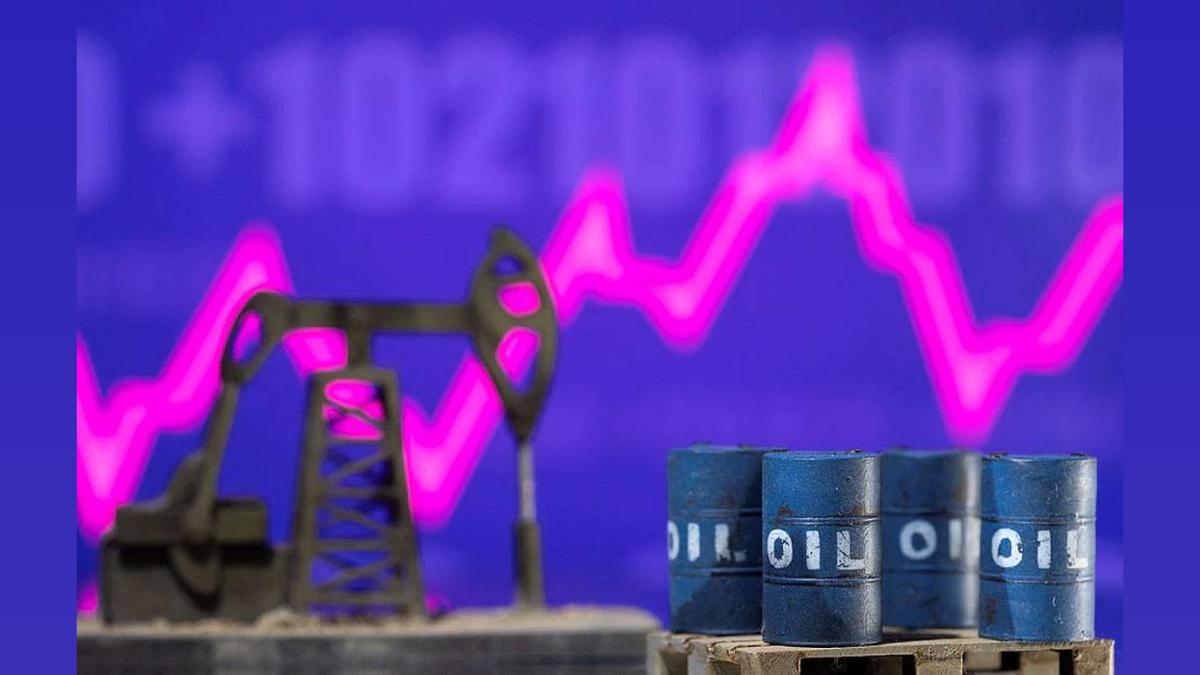
Spectacular Oil Prices Spike To Over $110 A Barrel, Highest Since Pandemic Picture Concept
A captivating oil prices spike to over $110 a barrel, highest since pandemic scene that brings tranquility and beauty to any device.
Download these oil prices spike to over $110 a barrel, highest since pandemic wallpapers for free and use them on your desktop or mobile devices.